
NAR Press Communiqué on the Mass Storming of Ceuta in Late July 2026
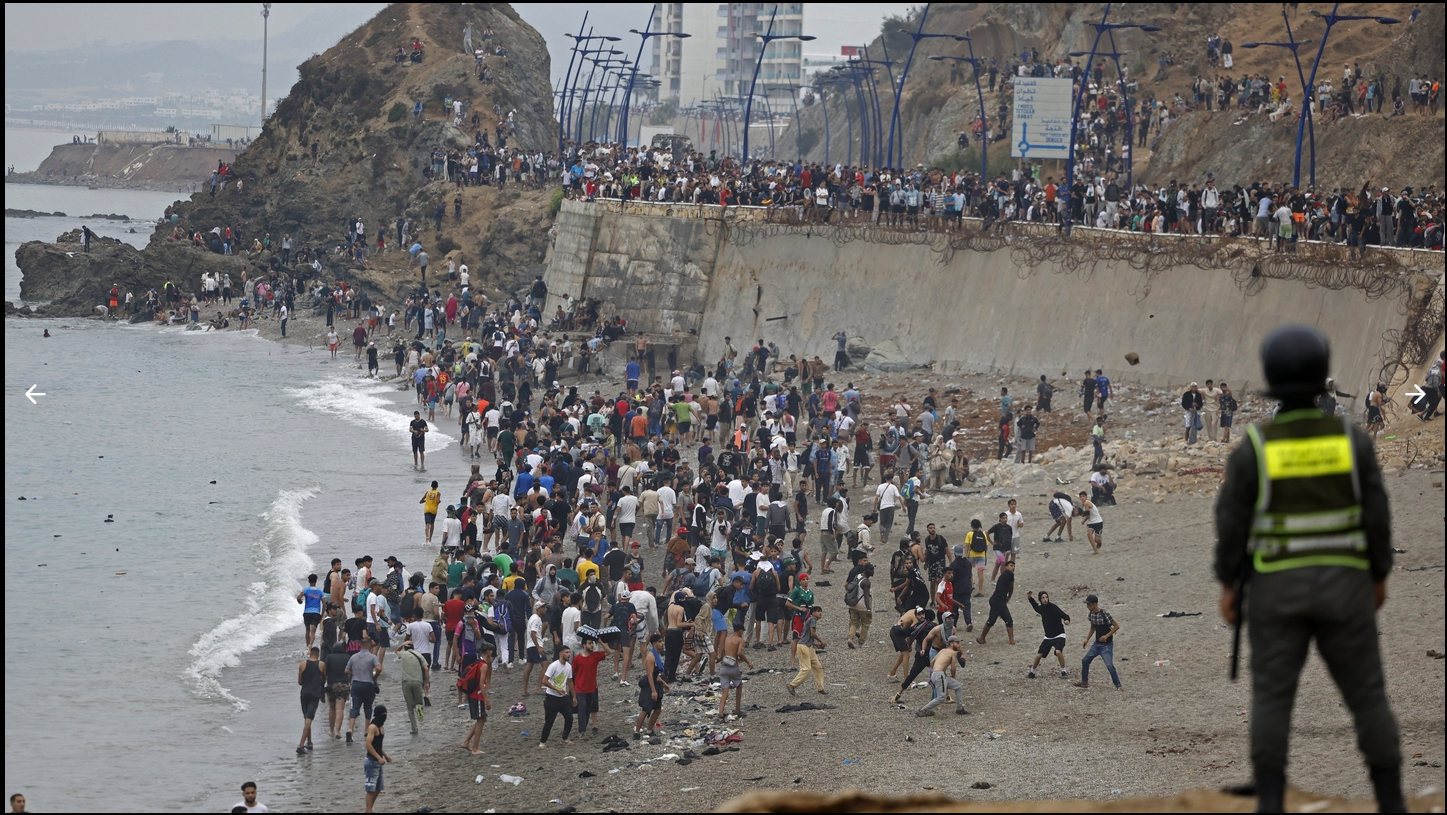
On 30 and 31 July 2026, more than 70,000 people, the vast majority of whom hold Moroccan nationality, stormed the Spanish exclave of Ceuta. They came from all layers of society, but a striking number of them were young people and even minors, both boys and girls. The Moroccan authorities did nothing to prevent this storming, while Spain was unable to cope with the situation. According to human rights organisations and the Spanish authorities, more than 140 people died during the incident, including Rifains; they drowned at sea.
In the days leading up to the storming, messages circulated on social media encouraging Moroccan young people to make the crossing to Ceuta. These messages referred to a ruling by the Spanish Supreme Court. At the beginning of July, the Court ruled that migrants attempting to reach Ceuta by swimming or by boat may not be returned without due procedure. An Algerian national had brought the case after being intercepted at sea and won the case before the court.
The ruling spread like wildfire on social media in the days before the storming. It is highly likely that this played a role in the large influx of migrants.
The Moroccan regime was certainly aware of these messages and was capable of tracing their sources, given its experienced intelligence apparatus and the very large presence of intelligence and security services, police and the military in the Rif. This presence was further reinforced by the arrival of Mohammed VI, who delivered his throne speech on the day of the storming from his palace in Tetouan, which lies along the route taken by the immigrants to reach Ceuta.
Yet the Moroccan regime did not intervene. According to testimonies, Moroccan informants from the Ministry of the Interior even encouraged people in various parts of Morocco to travel to Ceuta because the gates at the border with Ceuta would supposedly be opened. The fact that the immigrants came from different parts of Morocco indicates, in our view, that the regime played a role in the events.
A female immigrant made an appeal from Ceuta through the Moroccan media, saying: “Do those who brought us here also want to bring us back to our homes?” She was immediately prosecuted by the Moroccan authorities for spreading fake news.
It was important to the Moroccan regime that the number of people taking part in the storming be high. Morocco has a history of using civilians in its political struggle. In 2021, Moroccan border guards opened the gates, after which more than 8,000 immigrants entered Ceuta. This happened in the middle of the COVID-19 pandemic.
In 1975, Hassan II also sent 350,000 Moroccans to storm Western Sahara, after which he was stopped by the United Nations.
It seems highly likely that the Moroccan regime committed a crime by allowing this large group of people to flee and leaving them to their fate when they ended up in the sea and drowned. The regime has thereby caused a very major crisis within Morocco. A large part of the population wants to leave Morocco because of economic, social or political reasons. All the factors for this are present. Even worse, no assistance was provided to people in distress when they began to drown. The Moroccan regime literally drove these migrants to their deaths.
Morocco also failed to cooperate with Spain to recover the bodies of the victims from Spanish mortuaries. Moreover, a Moroccan minister publicly attempted to blackmail Spanish public opinion by stating that the regime did not want to simply bring the dead back. He was seeking something in return for the regime.
We, as a Rifian human rights organisation, strongly hold the Moroccan regime responsible for these criminal acts. The regime incited this enormous group of people to flee via an extremely risky and dangerous route, did not stop them and provided them with no assistance when they were in mortal danger.
As an organisation, we have previously written to the Spanish government and the Spanish Parliament on several occasions and warned them about the dangers of cooperation with the Moroccan regime.
We have learned that a number of Spanish organisations intend to pursue legal action at the national and international levels against Moroccan officials, including King Mohammed VI, over this mass storming. We support these actions.