
URGENT APPEAL: MOHAMED JELLOUL TEACHER IMPRISONED FOR PEACEFUL CIVIC ENGAGEMENT
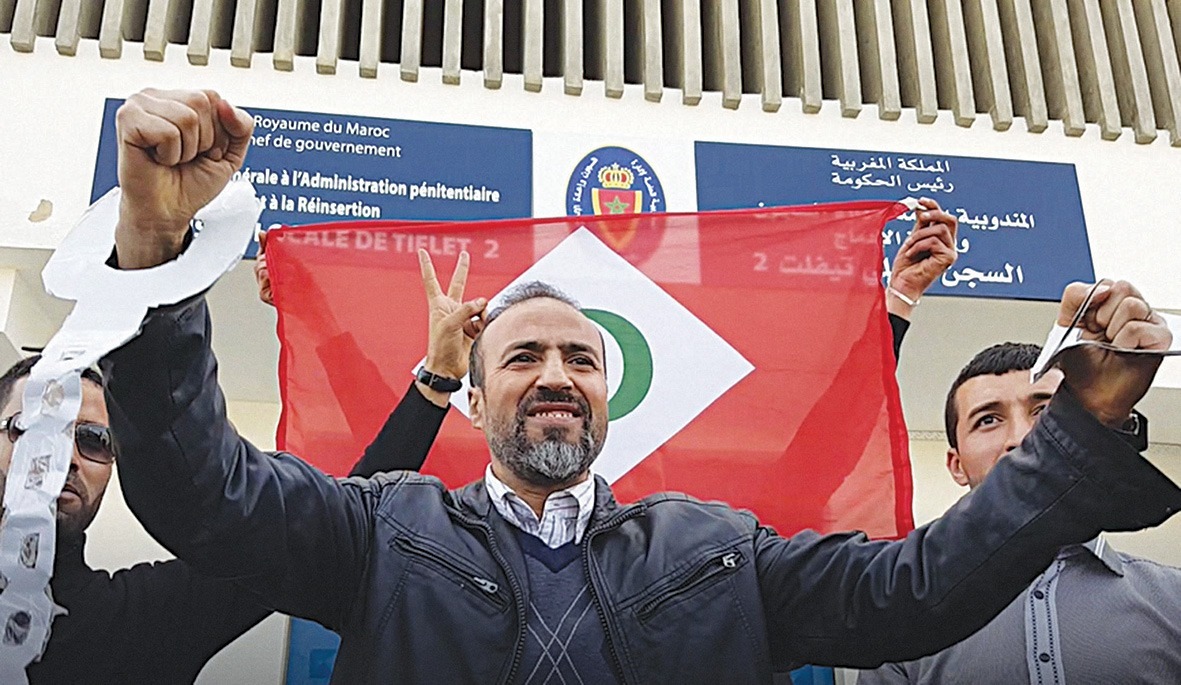
We are writing to you on the occasion of World Teachers’ Day, to draw your attention to the case of Mohamed Jelloul, a Riffian teacher and human-rights advocate who is currently serving a ten-year prison sentence in Morocco following his participation in the peaceful protest movement known as the Hirak Rif. On this day dedicated to recognizing the vital role of teachers in society, we believe it is particularly important to highlight the case of a teacher who has spent years deprived of his freedom because of his peaceful civic engagement.
According to information available to the National Assembly of Rif (NAR) and the Riffian Council for Human Rights (RCHR), Mohamed Jelloul is expected to be released in 2027. However, his imprisonment has already deprived him of fifteen years of his life in total, following two separate convictions connected to his participation in peaceful protests and civic activism.
Who Is Mohamed Jelloul?
Mohamed Jelloul was born in the Rif in 1971. He is a teacher who has also spent many years actively advocating for human rights and for marginalized groups in the Rif, including unemployed university graduates, fishermen, and farmers.
He has been active in various civil society organizations and trade unions. He also participated in the protests of the February 20 Movement in the Rif in 2011 and in the Hirak Rif protest movement in 2017.
His social and political engagement has had profound consequences for his life. He has received prison sentences totaling fifteen years. According to NAR and RCHR, these convictions were based on false accusations and resulted from proceedings conducted in a politically motivated context.
The Impact on Mohamed Jelloul and His Family
Mohamed Jelloul is married and has three children: Houda, born in 1997; Ayoub, born in 1999; and Kamal, born in 2002.
His arrests and prolonged detention have had serious consequences for both him and his family. These consequences have been not only social and financial but also physical and psychological.
Mohamed Jelloul has been placed in solitary confinement on several occasions. He has also undertaken several hunger strikes because he was denied the most basic rights, including the right to maintain contact with his family.
Furthermore, his imprisonment has prevented him from practicing his profession as a teacher
for many years and has caused him to miss a significant part of his children’s lives.
His youngest child was only ten years old when Mohamed Jelloul was separated from his family during his first period of detention. His prolonged absence as a father has left deep scars on his children’s lives and on the family as a whole.
The Need for Justice and Reparation
Mohamed Jelloul is expected to leave prison in 2027. His release, however, will not undo the fifteen years he has lost or the consequences that his imprisonment has had on his family, profession, and social life.
We therefore believe that his case requires more than simply the completion of his sentence. There must be recognition of the alleged violations and meaningful measures of redress.
We respectfully ask you to examine Mohamed Jelloul’s case and, where its findings support the allegations, to advocate for:
- A full and independent review of his convictions and the proceedings that resulted in his imprisonment, including whether he was prosecuted and imprisoned solely or principally for exercising his rights to peaceful assembly, expression, and civic participation.
- Exoneration and restoration of his reputation and rights if it is established that his convictions resulted from politically motivated or otherwise unfair proceedings.
- An independent and transparent investigation into the circumstances surrounding his arrests, prosecutions, convictions, detention conditions, periods of solitary confinement, and hunger strikes.
- Appropriate compensation and other forms of reparation for the material, professional, social, physical, and psychological harm suffered by Mohamed Jelloul and his family.
- Restoration of his professional and social rights, including the opportunity to return to his profession as a teacher and to rebuild his life with dignity following his release.
- Recognition of the impact of prolonged imprisonment on his family, particularly his children, who have lost many years with their father as a consequence of his detention.
A teacher belongs in a school, alongside his students and his family — not in prison for his peaceful civic engagement.
Brussels, 5 October 2026
The National Assembly of Rif (NAR)
Riffian Council for Human Rights (RCHR)